

Lakers Draft Series: Players and Archetypes for Pick No. 25
A detailed draft deep-dive in collaboration with Mike Garcia.

With the NBA Draft now less than a week away, it feels like the right time for the next deep-dive in our Lakers Draft Series, which I’m doing in collaboration with Mike Garcia. Mike has been following the NBA Draft, with a special focus on the Lakers, for more than two decades and is a fellow Substack writer who runs Lakers Draft Scouting.
In the first article of this series, Mike and I tried to set the stage with a big-picture look at the Lakers’ No. 25 pick. We discussed the value of the selection itself, the increasing importance of cost-controlled young players under the current CBA, the historical return of late first-round picks, the Lakers’ draft track record, and whether recent front office changes, including the addition of Tony Bennett as a draft advisor, could signal a new direction for the organization’s draft strategy.
Lakers Draft Series: What to Do With the 25th Pick?

As we continue our offseason coverage, today we turn our attention to the 2026 NBA Draft, now less than a month away, with this year’s event set for June 23-24.
This time, we shift from the big picture to the prospects themselves. Do the Lakers prioritize immediate needs such as athleticism, speed, and a rim-running center? Or should they follow a best-player-available approach and target less obvious but equally important traits like decision-making, versatility, and all-around basketball IQ?
Mike and I will break down the archetypes and prospects that could realistically be available when the Lakers make the 25th pick.
Today’s highlights:
Understanding this draft class and the best-player-vs-need dilemma
Multi-dimensional, high-IQ forwards
High-motor big men
Two athletic projects and a different look at center
One more thing: shooting
1-Understanding this draft class and the best-player-vs-need dilemma
Before we start discussing specific names, it is worth taking a step back and looking at the 2026 draft class itself. Understanding the strengths, weaknesses, and overall shape of this class helps put the Lakers’ options at No. 25 into the proper context.
One thing Mike mentioned repeatedly during our discussions is that this is a relatively thin wing class, particularly in the range where the Lakers are expected to pick. That got me wondering whether it also explains why so many of the prospects projected between picks 20 and 30 seem to be big men. Is that simply how this draft class is built?
Every draft class is different in terms of star power, positional depth, and overall talent. Sometimes the best player, or even the No. 1 pick, may project as more of a borderline All-Star and be less refined skill-wise. Other times, like this draft, there are arguably four hypothetical No. 1 picks when compared to historical draft classes.
The depth by position changes every year too. This particular class is loaded with lottery-level guards. Unfortunately, the center class isn’t as talented at the top, but there are a lot of centers with different abilities throughout the draft. It just so happens that the wing class isn’t as talented compared to prior years.
Personally, I’ve never seen a draft with five lottery-level point guards all worthy of being selected in the top 13, and then this many big men projected in the pick 20 to 50 range.
The Consensus Big Board, built by averaging rankings across mainstream draft boards, provides a useful snapshot of the class. And Mike’s observation stands out immediately: guards dominate the lottery spots.
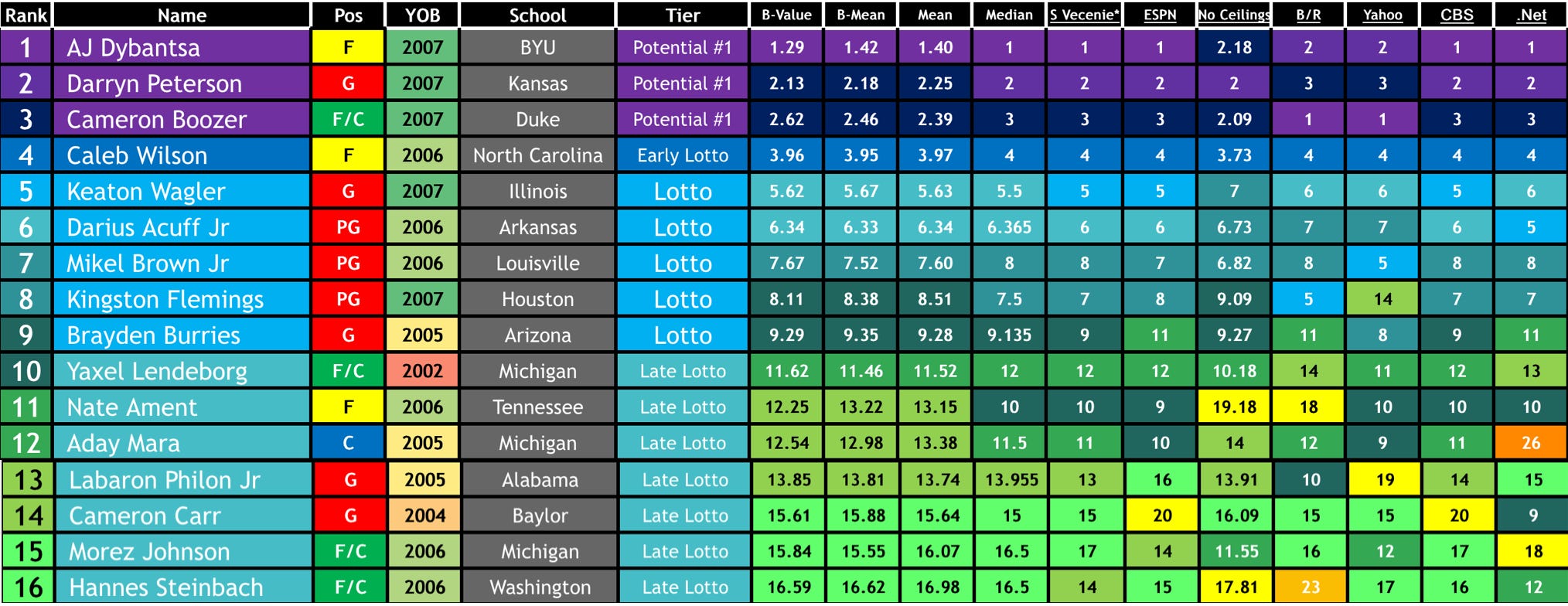
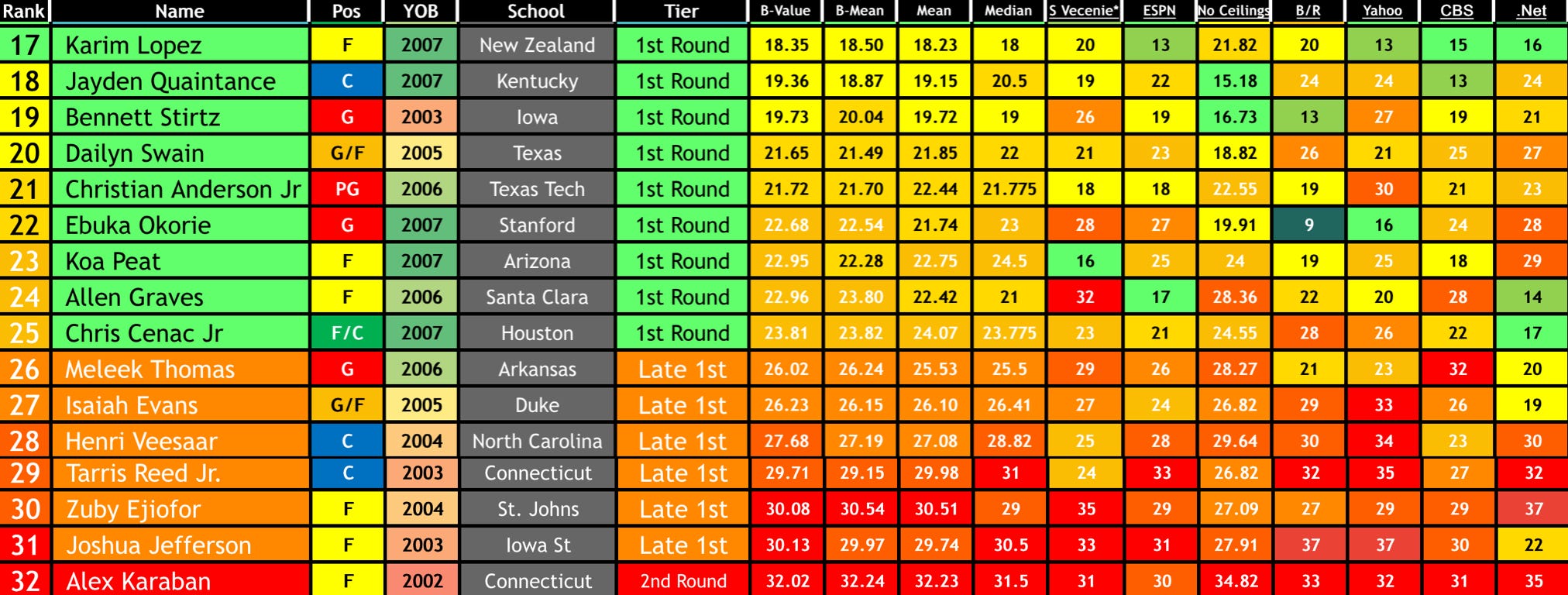
That naturally led to my next question for Mike: If this class is structured this way, should the Lakers simply stick to a best-player-available approach? And is that why you consistently favor prospects with strong decision-making, feel for the game, and basketball IQ, even when the roster's most obvious need might be athleticism?
I think the goal of every draft should be to acquire an asset. Every team needs another franchise player. Every team needs additional depth. But there is often an idea that a player at a certain position is more likely to make a team simply because there is an open roster spot at that position. I disagree with that.
If there are talented bigs who are more likely to stay in the league, those are the types of players who will stay on a roster, more so than a perceived project player who may possess a rarer skill set. It’s rare that the best player available also perfectly matches a positional need.
Kobe was traded for when the Lakers already had two All-Star guards in Nick Van Exel and Eddie Jones. I personally felt Jayson Tatum was clearly the more talented player than Lonzo Ball, even though Brandon Ingram was already on the roster.
Austin Reaves was signed in 2021. He’s the one who stuck on the team while Malik Monk, Talen Horton-Tucker, Russell Westbrook, and Rajon Rondo were all on the roster. Needless to say, that worked out.
2-Multi-dimensional, high-IQ forwards
There are two names I want to discuss that fit a similar archetype: multi-dimensional, high-IQ forwards. While they may not match the athletic wing profile many Lakers fans would like to see next to Luka Dončić, we have just seen how valuable this type of player can be. OG Anunoby, Mikal Bridges, and Josh Hart were key pieces in elevating Jalen Brunson’s heliocentric model all the way to a championship.
None of them are traditional three-and-D specialists. They can handle the ball, make decisions, keep the offense moving, and impact the game in a variety of ways on both ends of the floor.
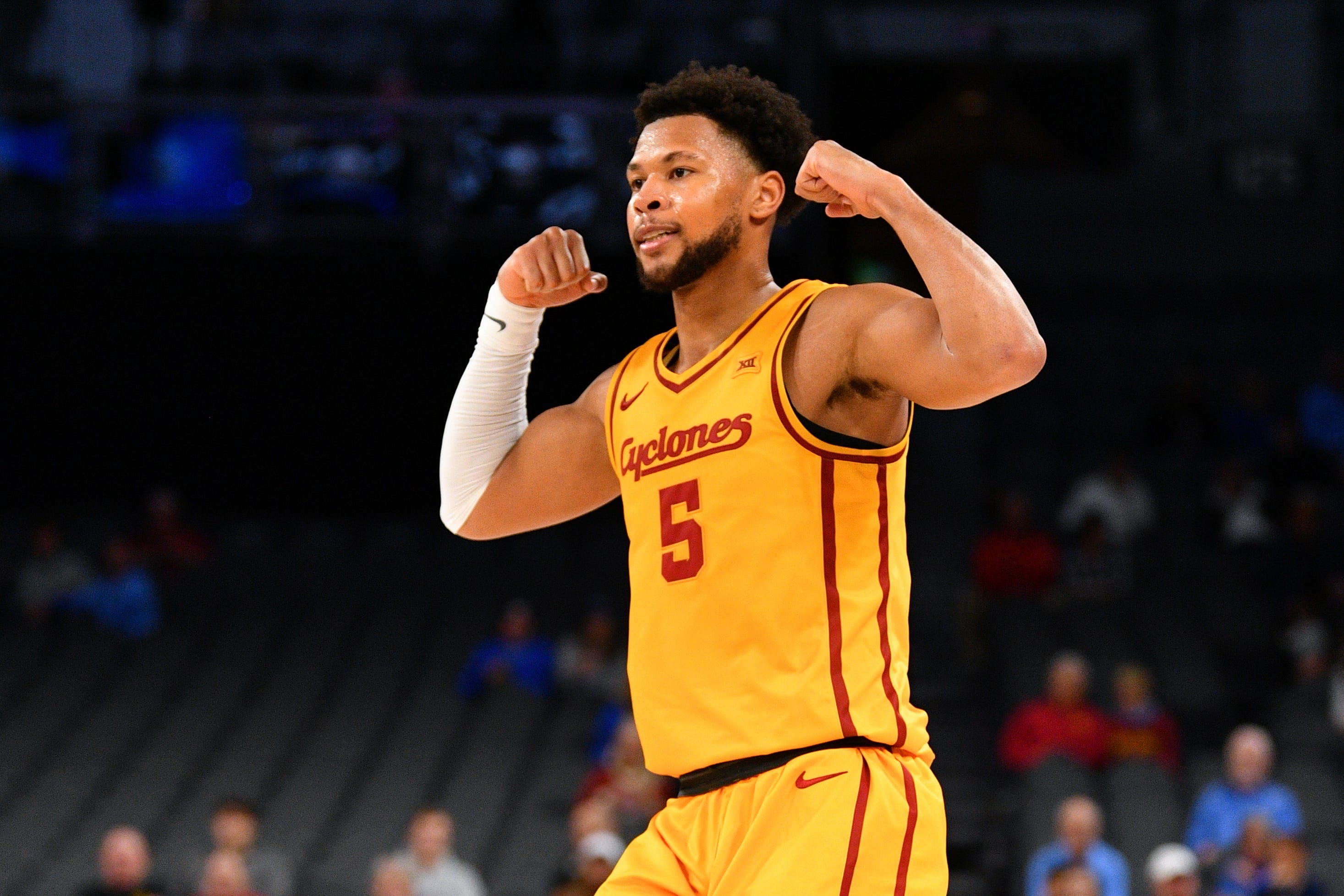
The first name is Mike's top target for the Lakers at No. 25: Joshua Jefferson, a 6-foot-9, 240-pound, 22-year-old forward whose combination of size, feel, and all-around game fits many of the traits Mike values most. Because of his build and style of play, Jefferson has been compared to forwards such as Kyle Anderson, James Johnson, Grant Williams, and Kenrich Williams. I’m not a huge draft person, so these types of NBA comparisons help provide context and create a frame of reference (more on that in a moment).
Here’s how Mike sees Jefferson through that lens:
I tend to find player comparisons difficult to make, but I understand that they help people visualize potential outcomes. I definitely lean more toward the Kyle Anderson, James Johnson, and Kenrich Williams comparisons. Of those, I would expect Jefferson’s outcome to be closest to Anderson’s because both possess a level of IQ and instinct on both ends of the floor that isn’t easily taught. The biggest difference is that Jefferson is more of a strength-based creator.
I don’t think immediate contribution is directly correlated with age. I think it comes down more to strength, IQ, skill, and motor. Jefferson measured at over 250 pounds at the NBA Draft Combine and showed a true triple-threat skill set, along with the ability to pass regardless of touch time and while on the move. His defensive instincts stand out, and he makes far fewer mistakes than most incoming rookies.
I would expect him to contribute immediately and eventually stand out among the Lakers’ rotation players.
Jefferson's outside shot remains a question mark, and he is not an outstanding athlete. But he is an example of a potentially multi-dimensional forward who could fit the dribble, pass, and shoot requirements JJ Redick highlighted after the playoffs as a need for next season.
The other player in this archetype is Allen Graves, a 6-foot-9, 225-pound forward out of Santa Clara. While Jefferson brings age and experience, Graves won't turn 20 until July 28, offering a different blend of youth and upside. Graves is an advanced analytics darling who fits a slightly different version of this archetype. While Jefferson's appeal is rooted more in his offensive polish and decision-making, Graves stands out as a defensive-minded forward whose value comes from defensive playmaking, versatility, and his ability to generate stocks.
