

Top Centers in the West, Ranked
Let’s have some offseason fun (and fuel your group chat arguments).

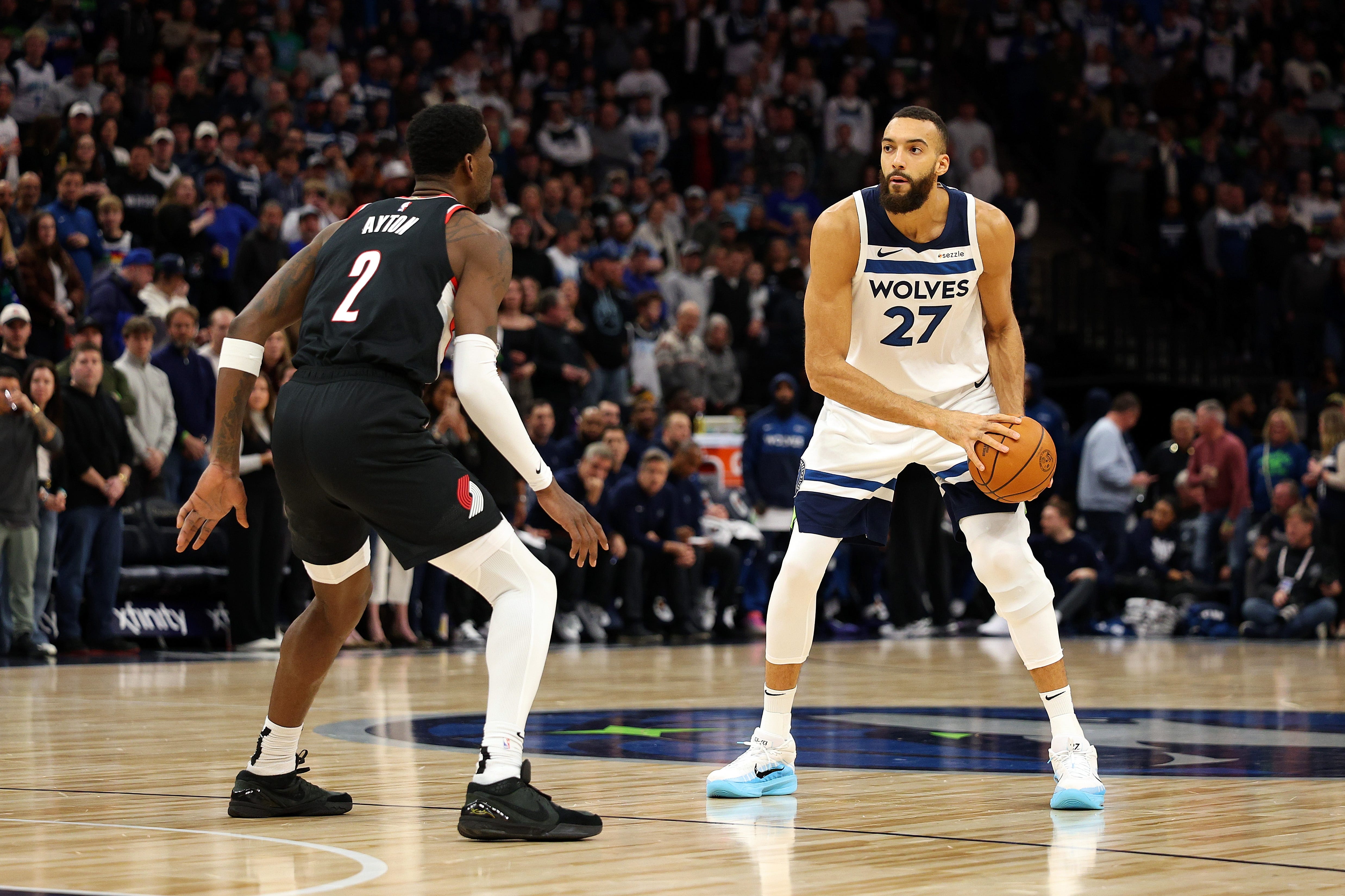
There’s no real basketball to watch until at least August 8, when Luka Dončić and Slovenia take on the reigning FIBA World Champions Germany in an exhibition game in Ljubljana. That matchup serves as a warm-up for EuroBasket 2025, which kicks off later in August (I’m planning to attend both the game in Ljubljana and a couple of Slovenia’s group stage games in Poland).
The NBA calendar is in hibernation, and real games are still weeks away. So why not have some fun?
The NBA calendar is in hibernation, and real games are still weeks away. So why not have some fun?
Deandre Ayton filling the Lakers’ huge hole in the middle, the Mavericks going super-sized with four centers on the roster, and teams like Houston going all-in on the same strategy got me thinking — where do Ayton and the Mavericks’ bigs actually rank among Western Conference centers?
I did a ranking exercise, which turned out to be trickier (and way more fun) than it seemed at first.
Before we get to the rankings, let’s lay down some key parameters of my analysis. I didn’t consider Anthony Davis as a center, because of the Mavericks’ strategy to build a team around him as a power forward and already having two other true centers on the roster. If I did include him, he’d probably land second or third. Similarly, Chet Holmgren isn’t part of the ranking either. The Thunder start him at the four next to Isaiah Hartenstein, even though both Holmgren and Davis will close plenty of games at center. That only makes an already deep Western Conference big man pool even deeper.
I also left out rookie centers drafted in June — we don’t have a track record yet. I don’t expect any of them to crack the top ten right away, but you’ll find them (and a few other names) in the “notable mentions” section at the end. Al Horford didn’t make the list either, even though he’s expected to sign with the Warriors at some point. If I had included him, he’d land somewhere in the top 15.
And last but not least, playoff track record was a key swing factor. That’s why I’m a bit higher on players like Dereck Lively II, Deandre Ayton, Isaiah Hartenstein, or Naz Reid — all of whom showed they can contribute to deep postseason runs — than on someone like Domantas Sabonis or Daniel Gafford, whose playoff production hasn’t quite lived up to their regular season numbers.
1-Nikola Jokić, Denver Nuggets
Career stats: 21.8 points, 10.9 rebounds, 7.2 assists, 0.7 blocks, 1.3 steals, 31.7 minutes
Last season stats: 29.6 points, 12.7 rebounds, 10.2 assists, 0.6 blocks, 1.8 steals, 36.7 minutes
Quick scout: Not much to debate here. The three-time MVP is still very likely the best player in the NBA — not just the best center or big man in the conference. He’s also the only center on this list we can unequivocally say is capable of being the primary offensive hub on a title-contending team. That’s a much tougher case to make for some of the other bigs on this list, and it’s one of the factors I considered in my rankings. At 30, he’s well in his prime, and I don’t expect him to slip anytime soon.
Playoff track record: Jokić was the Finals MVP and the best player on a championship team. The résumé speaks for itself.
2-Victor Wembanyama, San Antonio Spurs
Career stats: 22.5 points, 10.8 rebounds, 3.8 assists, 3.7 blocks, 1.2 steals, 31.1 minutes
Last season stats: 24.3 points, 11.0 rebounds, 3.7 assists, 3.8 blocks, 1.1 steals, 33.2 minutes
Quick scout: If not for the blood clot issue that sidelined him for nearly half the season, Wembanyama would likely have claimed his first Defensive Player of the Year award in just his sophomore year. For context, his fellow Frenchman Rudy Gobert, also a defensive disruptor, won his first DPOY in his fifth season at age 25. Like Gobert in his prime, Wembanyama is already a one-man guarantee for elite defense. But at 7-foot-4 with an estimated 8-foot wingspan, his defensive ceiling should surpass even that of the four-time DPOY, as wild as that sounds.
Wembanyama is only 21, and the key question going forward is whether he can also become the primary offensive hub on a contending team. But even if that doesn’t happen, his defensive impact and elite finishing guarantee he’ll be in MVP conversations for a long time — if health permits.
Playoff track record: If Anthony Davis were in consideration for these rankings, I’d have a tough call between him and Wembanyama for the second spot, simply because of Davis’s proven playoff résumé, while we’ve yet to see the French prodigy perform in the postseason. But with Davis excluded, there’s no doubt Wembanyama ranks second only to Jokić.
3-Ivica Zubac, Los Angeles Clippers
Career stats: 10.2 points, 8.1 rebounds, 1.4 assists, 1.0 blocks, 0.4 steals, 23.0 minutes
Last season stats: 16.8 points, 12.6 rebounds, 2.7 assists, 1.1 blocks, 0.7 steals, 32.8 minutes
Quick scout: This was a tough call between Zubac and Alperen Sengun for the third spot, but in the end I went with the Croatian big man because of team building and style of play aspect. Sengun is at his best as an offensive hub, but he’s not quite on Jokić’s level to justify building an entire offense around him. Zubac, on the other hand, fits a wider range of systems, is a much better and even very good defender, and doesn’t need the ball to make an impact. When he does get touches, he’s shown real growth — capable of punishing defenses with a post hook, a short floater, or a simple pass out of the short roll. At 28, he’s entering his prime and is expected to keep improving.
Playoff track record: Earlier in his career, and after being on the wrong end of a few Luka Dončić highlights, Zubac had a reputation for getting played off the floor in the playoffs. But over the last two postseasons — despite the Clippers losing in the first round both times — he’s proven he can hold his own. He was a real problem for Dallas in 2023–24 and battled well against Jokić in the seven-game series against Denver.
4-Alperen Sengun
Career stats: 16.0 points, 8.6 rebounds, 4.1 assists, 0.9 blocks, 1.0 steals, 28.3 minutes
Last season stats: 19.1 points, 10.3 rebounds, 4.9 assists, 0.8 blocks, 1.1 steals, 31.5 minutes
Quick scout: At 22, Sengun is the second-youngest player in the top six and continues to expand his game. He might be the second-best passer and playmaker on this list, and he’s shown improvement on the defensive end. However, as mentioned earlier, it’s hard to be the best player on a contending team if you’re not at Jokić’s level offensively and not the type of big who can anchor a defense.
Playoff track record: The young Rockets exceeded expectations by earning the number two seed, but couldn’t carry that momentum into the playoffs, losing to a veteran Warriors team in a hard-fought seven-game first-round series. That defeat likely set the stage for their trade for Kevin Durant. Still, Sengun was one of the young Rockets who didn’t disappoint. He adapted his game, matched the physicality of Draymond Green as the series went on, and earned Green’s praise and respect by the end.
5-Rudy Gobert
Career stats: 12.6 points, 11.7 rebounds, 1.4 assists, 2.1 blocks, 0.7 steals, 30.7 minutes
Last season stats: 12.0 points, 10.9 rebounds, 1.8 assists, 1.4 blocks, 0.8 steals, 33.2 minutes
Quick scout: At 33, Gobert is the only player in my top ten over the age of 30 and the only one clearly on a downward trajectory. His block rate, offensive rebounding, and defensive on/off numbers remain strong, but have gradually declined since his peak years in Utah. Still, Gobert continues to be a dominant force on defense and the glass, serving as the backbone of a Timberwolves defense that has ranked in the top eight in the NBA in each of his three seasons in Minnesota.
Playoff track record: Much has been written about Gobert’s defensive impact and whether he can adapt to a more switch-heavy game in the playoffs. But the reality is, he’s been a key contributor on a team that reached the Conference Finals in each of the last two seasons. In my view, his offensive limitations have been the bigger concern, especially in the later rounds against elite competition.
6-Domantas Sabonis
Career stats: 16.1 points, 10.7 rebounds, 4.9 assists, 0.5 blocks, 0.8 steals, 30.8 minutes
Last season stats: 19.1 points, 13.9 rebounds, 6.0 assists, 0.4 blocks, 0.7 steals, 34.7 minutes
Quick scout: Sabonis is a regular-season stats machine and a double-double force who has led the NBA in rebounding in each of the last three seasons. His ability to outwork and often bully weaker big men, pass from the high post, and dominate the glass makes him one of the most productive bigs in the league, at least from October to April. However, like with Sengun, the playmaking big archetype has its limitations, and Sabonis is an even weaker rim protector than his Turkish counterpart.
Playoff track record: Sabonis is a three-time All-Star and two-time All-NBA Third Team selection, and based on accolades alone, he could rank higher on this list. However, at 29, he has just one playoff appearance as a key player — a first-round exit with against the Warriors — and in that series, he struggled to be the kind of scorer and impact player his defensive limitations demand.
7-Deandre Ayton
Career stats: 16.4 points, 10.5 rebounds, 1.6 assists, 1.0 blocks, 0.7 steals, 30.8 minutes
Last season stats: 14.4 points, 10.2 rebounds, 1.6 assists, 1.0 blocks, 0.8 steals, 30.2 minutes
Quick scout: After the top six, there’s a clear gap, and this is where the rankings get tricky. I placed Ayton here because his talent is on a similar level to someone like Zubac, who ranks much higher. If the former number one pick ever lives up to that potential, he could enter the Zubac and Sengun conversation. There aren’t many bigs who have averaged a double-double — at least 14 points and 10 rebounds — in each of their first seven seasons like Ayton has.
Deandre Ayton and the Lakers: Short-Term Fix or Long-Term Solution?

After months of speculation and two long days of waiting in free agency, the Lakers finally got their most important piece in the offseason, a move that will have a cascade effect on all other future moves, by signing the 26-year-old former number one pick, the mercurial big man Deandre Ayton. The Lakers agreed to
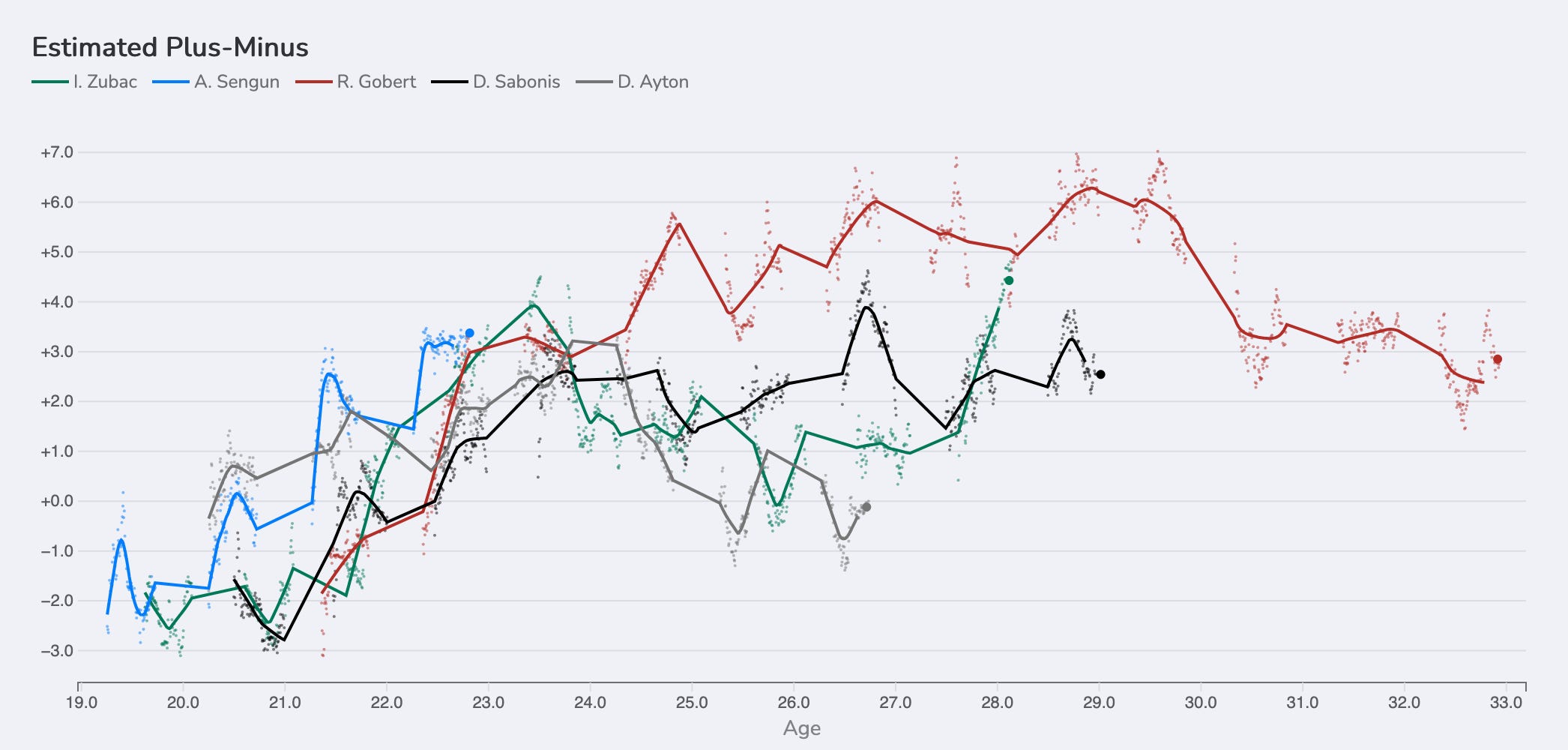
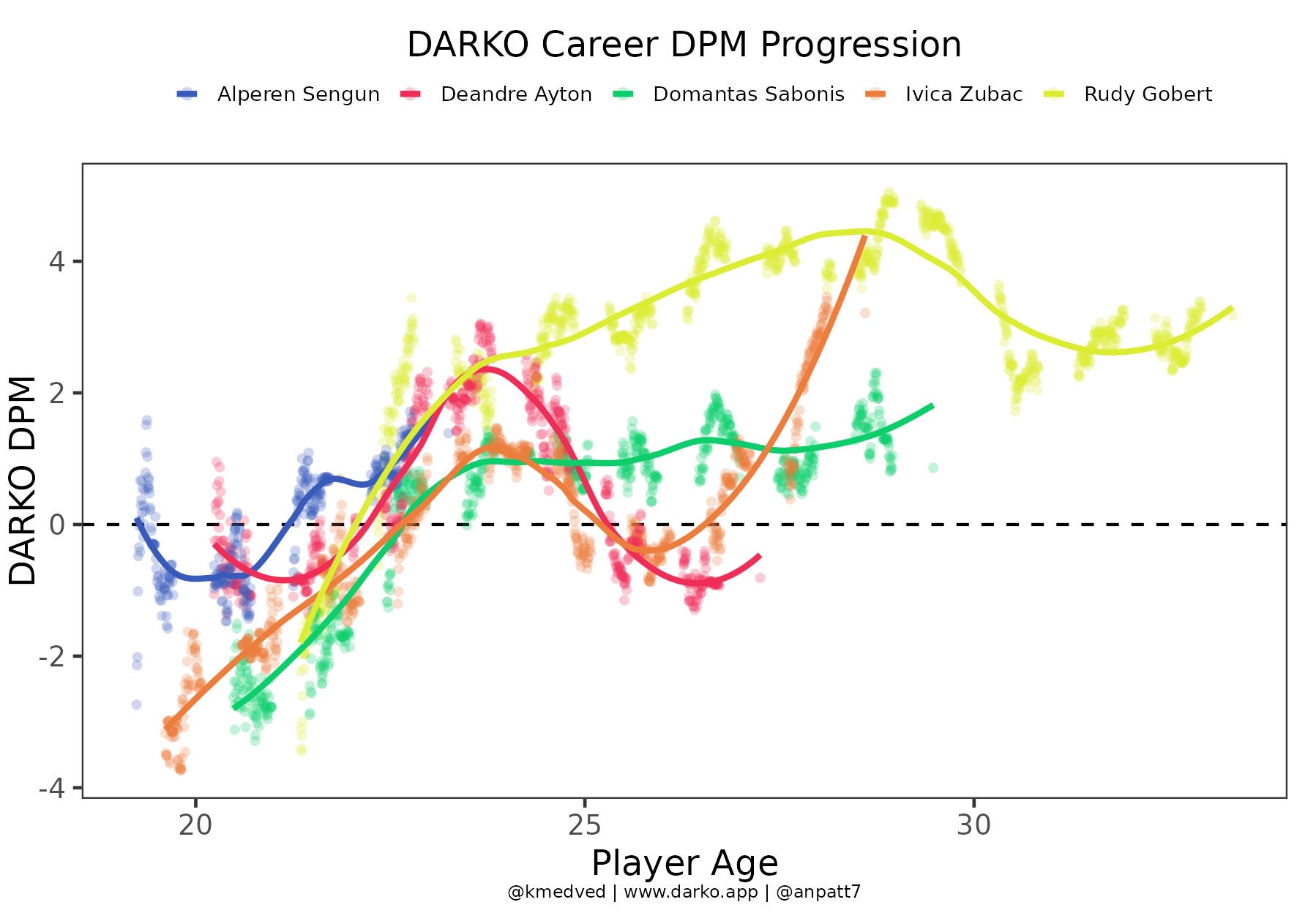
But there’s also a real chance he falls out of the top ten, maybe even the top fifteen, if he doesn’t turn things around in Los Angeles. Advanced metrics haven’t been kind to Ayton lately. He ranked well below most of the other centers on this list in Estimated Plus-Minus over the last two seasons. But part of that can be attributed to playing on a bad team and still chasing the expectations that come with being a former number one pick and wanting to be a featured option on offense. Ayton turned 27 just a couple of days ago, and if you look back at his advanced metrics from before the trade to Portland, he was right there in terms of impact compared to some of the players ranked above him on this list at a similar age.
Playoff track record: Ayton playing a key role — averaging 16 points, 12 rebounds, and a block per game — on the 2021 Suns team that reached the NBA Finals is a big reason why I ranked him ahead of some other centers on this list. He certainly has his limitations, and his decline in Phoenix began the following postseason, particularly in the series against Dallas, when his effort and decision-making frustrated the coaching staff. There’s plenty for him to clean up and adapt his game, but playing alongside an elite playmaker like Dončić is another reason to believe he can turn things around.
8-Dereck Lively II
Career stats: 8.8 points, 7.1 rebounds, 1.6 assists, 1.5 blocks, 0.6 steals, 23.4 minutes
Last season stats: 8.7 points, 7.5 rebounds, 2.4 assists, 1.6 blocks, 0.6 steals, 23.1 minutes
Quick scout: My digginbasketball readers and fellow Mavs fans already know I’m a big believer in Lively. I think he has All-Defense potential and could eventually become the second-best defensive player on this list, behind only Wembanyama. If I had done these rankings right after the 2023–24 Finals, I probably would have placed him in the four-to-five range. He also showed encouraging progress as a passer and decision-maker before injuries interrupted his development last season, and at 21 (just a month younger than Wembanyama) he’s the youngest player in my top ten.
Where’s the Leap? Checking in on Dereck Lively II’s Sophomore Season

So, what’s up with Dereck Lively II?
However, the injury and durability concerns — now amplified by another foot surgery this offseason — are real. So are the questions raised by the Mavericks’ recent shift in direction. After the Dončić–Davis swap and drafting Cooper Flagg, it’s clear Lively is no longer the team’s priority big man or its most important young prospect. He and Davis bring overlapping defensive strengths, and neither is a three-point shooter, which raises spacing concerns when they share the floor. And without Dončić to feed him lobs, Lively’s most valuable offensive skill — being an athletic rim-running threat — loses much of its impact. Unlike with Ayton, where the team context offers some hope for a bounce-back, the current setup in Dallas gives me more reason for skepticism about Lively’s trajectory.
Playoff track record: Lively was a key contributor on a Finals team as a 20-year-old rookie, which says a lot about his potential and is a big reason why I ranked him eighth. He wasn’t much of a factor in the Finals against the Celtics, where he struggled to punish their strategy of guarding him with a smaller wing. But I believe that’s something he can overcome with age, added strength, more experience, and a more developed offensive arsenal.
9-Isaiah Hartenstein
Career stats: 6.8 points, 6.4 rebounds, 2.0 assists, 0.9 blocks, 0.7 steals, 19.5 minutes
Last season stats: 11.2 points, 10.7 rebounds, 3.8 assists, 1.1 blocks, 0.8 steals, 27.9 minutes
Quick scout: Hartenstein is only 27, but he plays with the poise and toughness of a 10-year vet. His individual counting stats may not jump off the page, but based on last season’s performance, he probably deserves to be ranked above both Ayton and Lively. He’s the ultimate glue guy, one of the best passers and offensive connectors on this list. Hartenstein excels as a decision-maker out of dribble handoffs and is a great screen setter. He’s also an underrated defender whose skill set gives the Thunder valuable scheme and matchup flexibility, complementing their aggressive ball pressure on the perimeter.
Playoff track record: Hartenstein was a key contributor for the OKC championship team, starting 20 of their 23 playoff games. His numbers dipped a bit in the Finals, where he shifted into more of a hybrid bench role. Unlike some players ranked higher, Hartenstein isn’t a star, but he’s elite at starring in his role — and he did it on the biggest stage for a very good team.
10-Walker Kessler
Career stats: 9.4 points, 9.2 rebounds, 1.2 assists, 2.4 blocks, 0.5 steals, 25.2 minutes
Last season stats: 11.1 points, 12.2 rebounds, 1.7 assists, 2.4 blocks, 0.6 steals, 30.0 minutes
Quick scout: I’ll round out the top ten with Kessler, though you could reasonably go in a few different directions from seven to fifteen depending on personal preference, team fit, or how much you value future potential. I ranked Kessler here based on the latter. He’s just 23 years old, and his rim protection and rebounding numbers are already approaching those of his predecessor in Utah, Rudy Gobert.
Playoff track record: Kessler has no playoff track record, so there’s no evidence yet of how he holds up in different defensive schemes. He excels at shot blocking and offensive rebounding — two strengths that stem from his length and vertical leaping ability — but he has mostly played alongside a more mobile big like John Collins to help cover some of his limitations. Based on current performance and playoff track record, veterans like Naz Reid, Brook Lopez, or Al Horford (if he were included in the rankings) would rank ahead of Kessler.
11-Naz Reid
A backup who could start on another team, but at his best as a sixth man who brings valuable versatility. His shooting gives teams a five-out look and can change the complexity of a game in the playoffs.
12-Donovan Clingan
At 21, another young big man prospect in the conference. With just one NBA season under his belt, he’s even less proven than Kessler — but if you value potential, he may have a higher defensive ceiling. The Blazers drafting another big, the Chinese playmaking center Yang Hansen, makes Clingan’s role and future a little more complicated.
13-Daniel Gafford
A good regular-season big and a highly efficient offensive center. He could start on many teams, but thrives as a backup who dominates second-unit bigs with his athleticism. However, he often struggles against more physical frontcourt matchups and might be the weakest defensive rebounder in the top 15. His impact was notably reduced during the Mavericks’ 2024 Finals run.
14-Brook Lopez
At 37 and expected to come off the bench for the Clippers, his role and age are key reasons for this ranking. Based purely on playoff résumé, defensive impact, and his ability to stretch the floor with reliable three-point shooting, he could easily rank a few spots higher than some of the less proven bigs ahead of him.
15-Mark Williams
Another unproven big man enigma with lingering and significant injury and mobility concerns that continue to cloud his long-term outlook. He’s an enormous talent (both literally and figuratively) and one I’d feel better about if paired with a playmaker like Dončić. That opportunity was lost when Williams failed his physical after being traded to the Lakers at the last deadline.
Mark Williams Deep-Dive: Luka Dončić’s New Pick-and-Roll Target

This is the first deep dive in my expanded coverage that goes beyond just Mavericks players, bringing insights on Luka Dončić, the Dallas Mavericks, the Los Angeles Lakers, and other NBA storylines.
Rest of the pack
Here are the remaining bigs in the Western Conference. You could rank them in just about any order, but they once again highlight how deep the big man talent pool really is.
16-Zach Edey
17-Steven Adams (If not for injury and playing time concerns, I’d have Adams ranked much higher)
18-Clint Capela
19-Jonas Valanciunas
20-Kevon Looney
21-Luke Kornet
22-Robert Williams III
23-Yves Missi
24-Jaylin Williams
25-Kelly Olynyk
26-Quinten Post
27-Nick Richards
28-Jaxson Hayes
29-Trayce Jackson-Davis
30-Oso Ighodaro
Other mentions: Jusuf Nurkić, Drew Eubanks, Jock Landale, Kai Jones, Duop Reath, Dwight Powell, Christian Koloko, DeAndre Jordan
Rookies: Khaman Maluach, Yang Hansen, Derik Queen, Joan Beringer, Yanic Konan Niederhäuser