

Early Season Signals: The Trend of Ball Pressure Continues
Observations from Lakers–Blazers, Mavericks, and other games

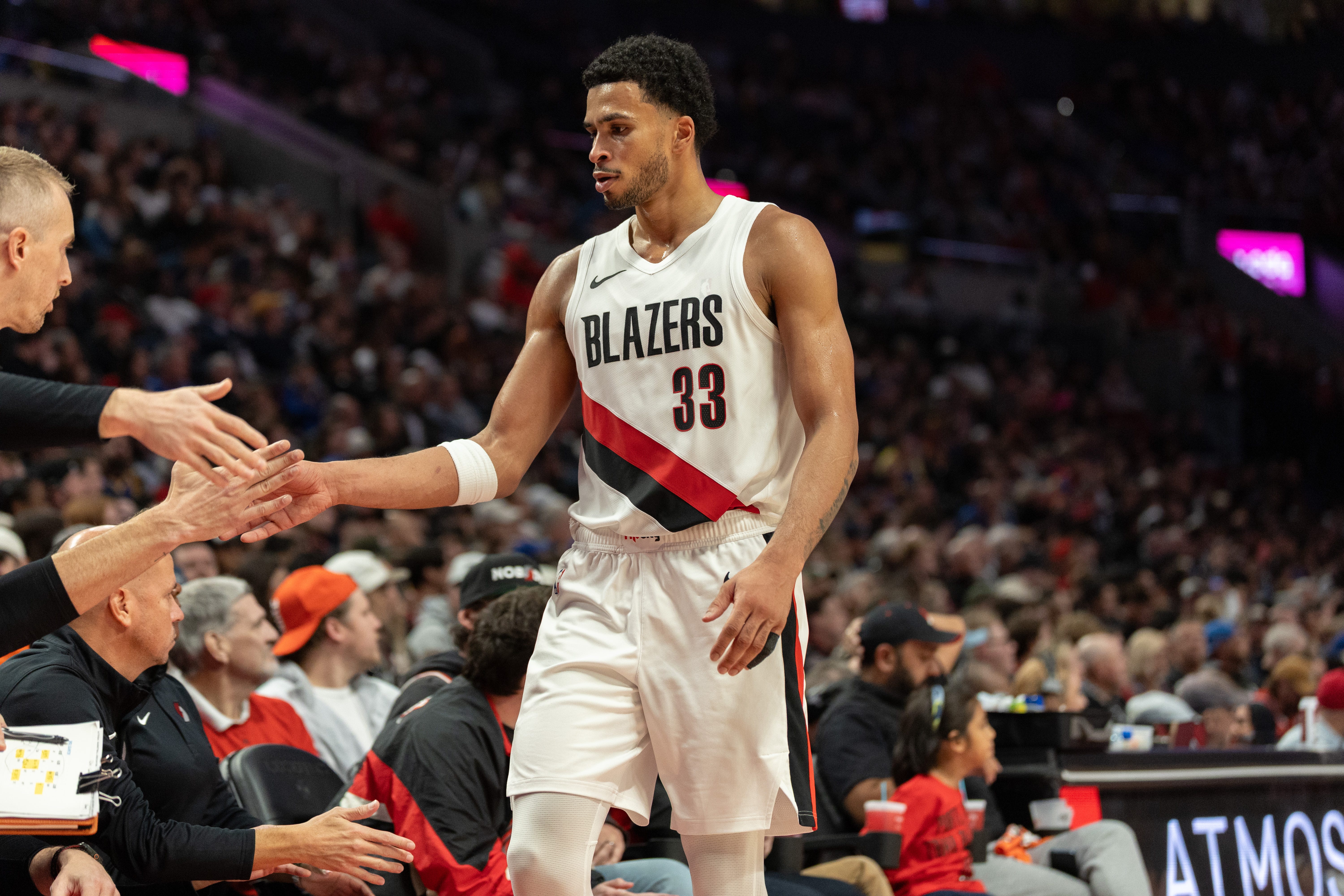
Yesterday I posted on X about how I treat my game notes as a chronicle of the season, not just simple recaps, trying to find bigger-picture signals that could turn into meaningful trends. And sometimes, like last night when the Lakers were missing half of their rotation, including Luka Dončić and LeBron James, and playing on a back-to-back, it’s better not to focus too much on the game itself, but rather dedicate the observations to more meaningful patterns.
Despite Austin Reaves balling out again, following his 51-point outburst against the Kings with 41 more, the depleted Lakers lost to a young, hungry, and aggressive Trail Blazers team, largely because of 23 turnovers. Reaves himself committed 8 of the 23 turnovers, struggling with the pressure of being picked up 94 feet throughout the game, as the Blazers knew there was no other reliable ball handler available with Luka Dončić, LeBron James, Gabe Vincent, and Marcus Smart all in street clothes.
After the game, JJ Redick bluntly summed up his team’s struggles, saying, “It’s hard to run an offense without ball handlers.”
And while that quote was certainly said in the context of this specific game, it made me reflect on what I’ve seen in the first week of the new NBA season — teams like the Mavericks struggling to organize an offense without a true ball handler on the floor, and others like the Timberwolves having similar issues when facing heavy ball pressure. For the Lakers, the fix for dealing with ball pressure is as simple as getting healthy. For other teams like Dallas, Minnesota, Orlando, or Houston, who are dealing with long-term injuries or clear playmaking deficiencies caused by their pivot toward size, it might eventually require roster reshuffles.
My loyal readers who followed my offseason NBA Trends Series, where I focused on identifying key shifts happening across the league, will remember that the rise of perimeter aggressiveness is something I’ve been tracking for a while. It was evident last season, throughout the playoffs, and reached its peak when two of the most aggressive ball-pressure teams, Oklahoma City and Indiana, faced off. During the first week of this season, that pressure has only intensified — and I’ll share a few examples and early data signals 📊 to back that up.
Today’s highlights:
The Trail Blazers doubling in on the Pacers’ full-court press model (🎞️VIDEO)
On-ball pressure is up for the eighth consecutive year 📊
Lakers and Mavericks still catching up to the NBA’s new reality
1-The Trail Blazers doubling in on the Pacers’ full-court press model (🎞️VIDEO)
If you are a Lakers fan and watched the Blazers for the first time this season, you could easily assume that their systematic 94-feet pressure against Reaves was a game-specific tactic to tire out the lone-standing Laker superstar who has been on fire to start the season. The tactic certainly worked, as Reaves and the Lakers committed several 8-second violations and other turnovers even before they got into their first action. And when they managed to bring the ball across half-court, they often burned half of the shot clock or were completely denied their first planned action.
However, I watched the Blazers a couple of nights earlier as part of my game prep while scouting the Timberwolves and saw Toumani Camara, Jrue Holiday, Deni Avdija, Matisse Thybulle, and Blake Wesley create all sorts of problems for Minnesota, who opened the season with their only true point guard, Mike Conley, playing limited minutes off the bench.
