

Quentin Grimes Is Back in a Familiar Role Alongside Luka Dončić
What did we learn from their time together in Dallas, and how does Grimes fit this new version of the Lakers?

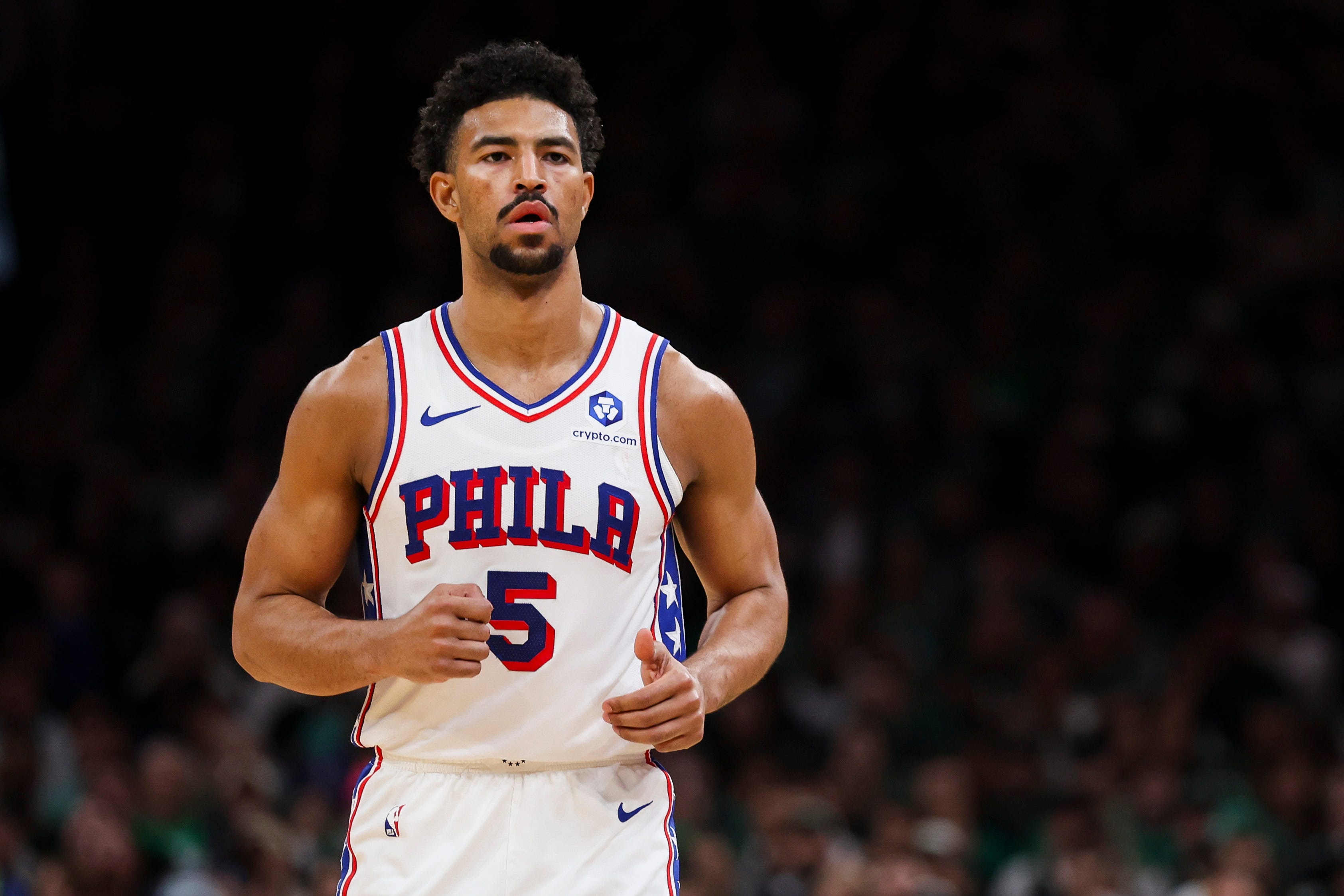
This is the third installment in our new player profile series, focusing on the Lakers’ newest additions.
We started with a mega deep dive into Walker Kessler, the centerpiece of the Lakers’ offseason. That was followed by a closer look at his potential frontcourt partner, the intriguing and multi-skilled Sandro Mamukelashvili.
Today, we turn to the Lakers’ first backcourt addition, Quentin Grimes, who is expected to fill the primary perimeter defender role in the starting lineup.
This one feels both a little special and a little odd. Special because Grimes was the subject of the first player profile I published on this platform (most of my notes from that profile remain relevant today) when I launched it in the summer of 2024. Looking back, those two years have flown by in a blur. I also cannot say enough how much I appreciate your support, which has allowed both the platform and me to grow from those humble beginnings.
And odd because that first Grimes profile examined a player who, together with Klay Thompson, was supposed to be one of the final missing pieces for a Mavericks team that had reached the NBA Finals just a few months earlier. The hope was that they could help push Dallas over the final hurdle and into the promised land.
We all know how dramatically that vision changed when Nico Harrison pulled the trigger on the most shocking trade in NBA history. Now Grimes is back alongside Luka Dončić, only this time in Los Angeles. You almost have to chuckle at just how wild, unpredictable, and fast-changing the NBA can be.
Today’s highlights:
The vision
The skill set
Another gap attacker with a high motor
A lot of speed, but a lack of an alternative plan
Past evidence and optimism for a Luka fit
The not-so-bold investment
The concern
1-The vision
I’ll keep the same structure I used for the Mamukelashvili profile. Looking at how each new addition fits the Lakers’ broader roster-building plan, established when Rob Pelinka reshuffled the roster by signing four players in that crucial 30-minute span on July 1, is the most intriguing part of these deep dives, at least for me.
But all new additions also come with some questions about the investment, as well as the enormous expectations that come with playing for a franchise as historic as the Lakers. That’s why keeping the final two sections, focused on the investment and the main concern, also makes sense.
Like Mamu, it’s not hard to see how Grimes fits the defining pillars of the Lakers’ new vision.
At 26, he is entering his prime and fits the Dončić and Austin Reaves timeline. He’s another player who will add shooting and spacing while helping transform the Lakers into a high-volume three-point shooting team, a theme I’ve been preaching all summer.
He will also bring speed and a high motor, two elements that were missing from last year’s team. JJ Redick wanted more players who can dribble, pass, and shoot, and Grimes, like Mamu, can do all three to some extent. At the very least, there is more to his offensive game than that of a typical 3-and-D specialist.
Lastly, Grimes already has experience playing next to and off Dončić, and by signing with the Lakers as a free agent, clearly wanted more of it. So, one can only assume he is another in a line of additions who understands his role within the new team’s hierarchy. With complete buy-in from everyone, that kind of role clarity could help make this team better than the sum of its parts.
